Put me on the list.
By Joy Sasser and Julie Paine, Tim Neet’s daughters
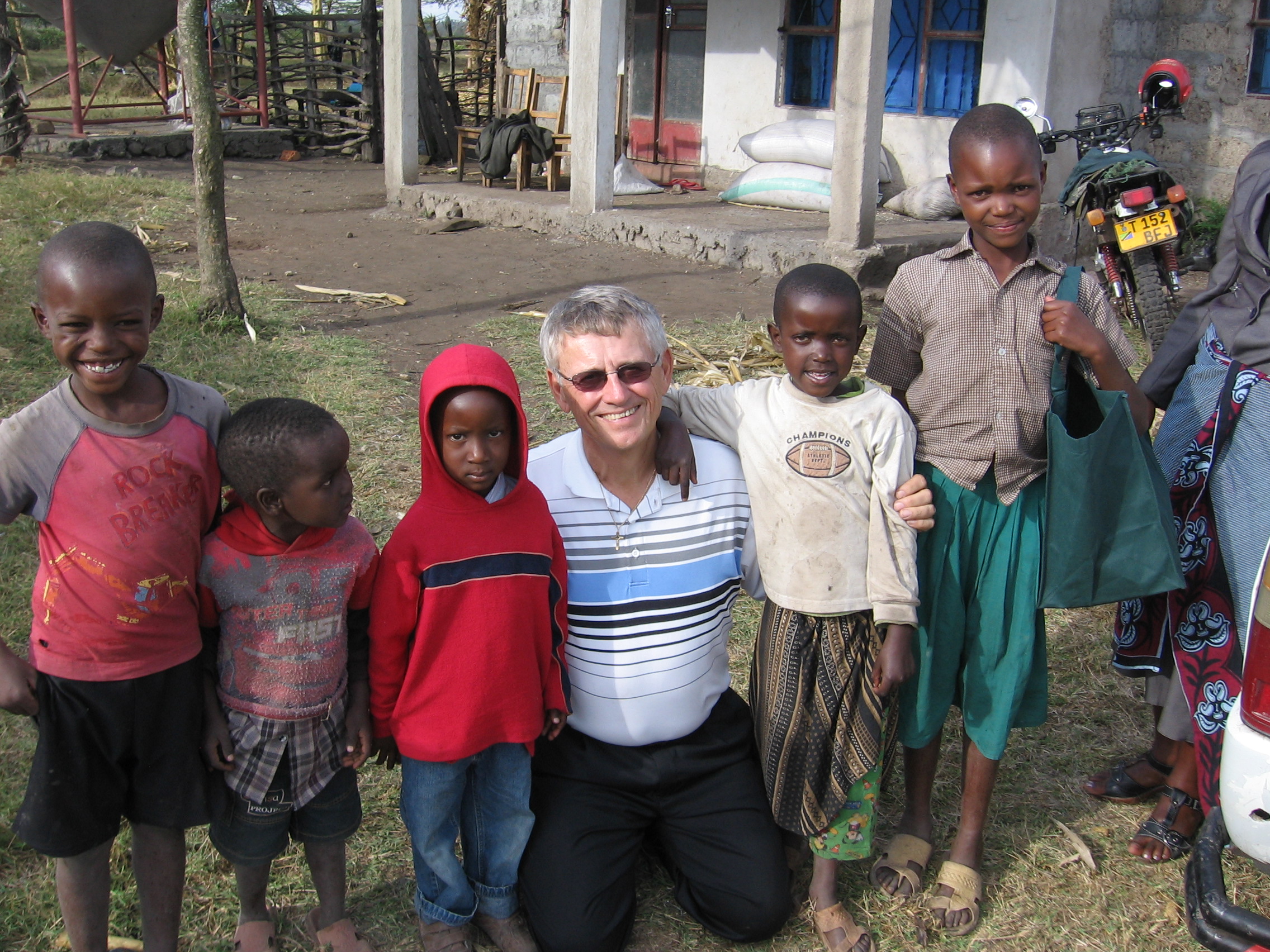
On a rocky hillside in Karansi, somewhere between one corner post and the next, they lost the translator. Pastor Wariaeli was passionately sharing the vision God gave him for the land, and our dad, walking beside him, could no longer understand a word the pastor was saying. So, Dad prayed out loud:
"Lord, I have no idea what this man is saying. But whatever it is, put me down. Put me on the list."
This is a story of the man who prayed that prayer, and then spent the next 25 years quietly keeping his word. That prayer did not come out of nowhere. It was part of a long road that started in our living room.

Before Africa
For most of our lives, Dad was an AT&Tman. He gave the company 30 years, was recognized early in his career as a strong leader, and was respected and well-liked by many. Our home was also a place where Dad not only cared deeply for us but, with Mom, shared the love of Jesus with so many. Our house was always full: Bible studies, Fellowship of Christian Athletes gatherings, people who needed a place to live for a period of time, and a steady stream of missionaries or new neighbors at the dinner table. Dad served on church mission boards, and he and Mom co-led almost everything they did. We grew up thinking it was normal to eat food we couldn't pronounce, with people whose stories were different from ours and whose accents we had to lean in to understand. Dad and Mom taught us that“different” was not something to fear. It was a place to see God bigger.
Here is the part Dad likes to tell: we went first. Julie's first mission trip was to the United Kingdom the year after she graduated from high school. A few years later, Joy went to Fiji while Julie went to Papua New Guinea. We still can’t believe they let both their girls go to the other side of the world on mission teams that lasted all summer! Dad co-led his first mission trip with Julie in the summer of 1991, to Trinidad and Tobago, with Joy (who had just graduated) and a group of high school students. We say they modeled ministry for us, but Dad says, "Mom and I followed after you gals.” As Matt got older, he also went on mission trips.
So when Dad reached 30 years at AT&T in1998, he asked a question most people his age don't ask: "What's God'swill for my life in the next 20 or 30 years?" The answer took him to the staff of Perimeter Church, which then led him to Africa.
The Excuse Card
Dad knew Isaiah 1:17 and James 1:27 by heart. He could tell you that God commands His people to care for orphans and widows. What he couldn't tell you, for most of his life, was the name of a single orphan or widow, "partly because I didn't look for them and gave myself an Excuse Card."
The Excuse Card was taken away, piece by piece. A pastor in Zambia told him that all he would do back home was bury people, because AIDS had left his village full of widows and orphans. In his years with Perimeter's global mercy and justice work, Dad met trafficked and enslaved children in Thailand, India, Cambodia, Uzbekistan and the Netherlands."They were no longer news reports that I could ignore. They possessed the heart of God."
That phrase, the heart of God, is the key to Dad. He began examining Scripture because he wanted to know God's heart, so that God could do a work in him. And once Dad had no excuse left, he went looking for a way to make sure his church had none either. That is how he came to be standing on a hillside in Karansi, asking God to put him on the list.
A team of two
Dad will be the first to say none of this was his alone, and the first name on that list is Mom. He calls her the vehicle God used in his life: her example of caring for others, especially the overlooked, shaped his heart long before Africa did. Early in the developing ministry in Tanzania, they served side by side. When the youngest children in the village were too young for any sponsorship program, Mom and Dad started one through Perimeter Church, so the little ones could be fed and cared for from the start.

Mom has her own quiet discipline. Each morning she asks God how He wants her to serve that day, then watches for who He puts in her path. "Children learn through example," she says. "That's how it's passed on." We are proof.
It wasn't always easy. They were intentional about bringing the family into the ministry rather than letting the ministry pull them away from the family. This became harder the more Dad was overseas. There was a harder season still. When Perimeter changed direction, and Dad was told he could keep his job only if he let go of Tanzania, he resigned and kept the work going as a volunteer until UBORA could stand on its own. He took the personal financial loss because he was confident God would keep leading, and that His peace would be with them.
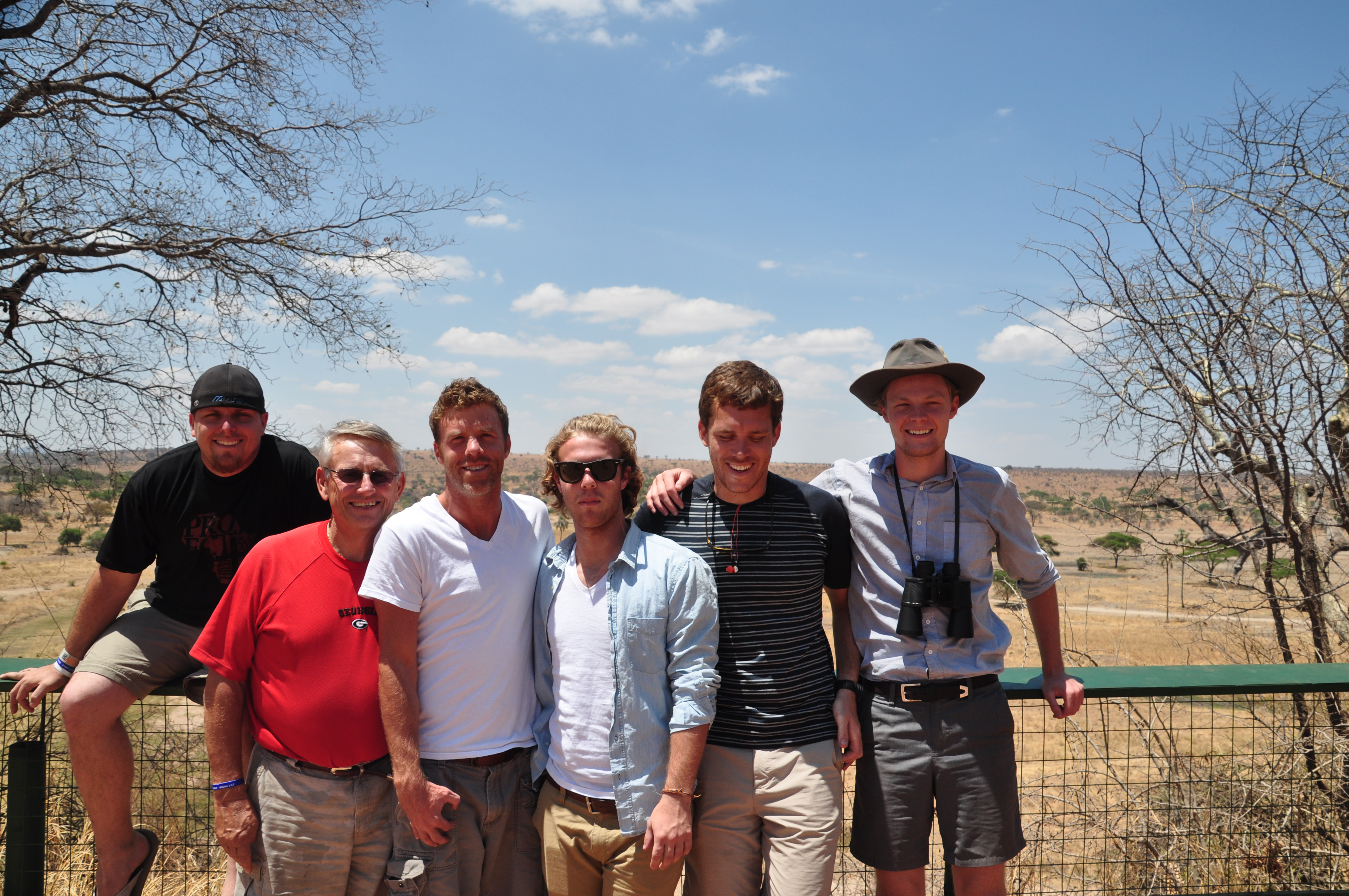
Over the years, he led church and leadership teams and created unique opportunities for our families and Matt to go to TZ and serve in different ways. In 2024, the three of us (Dad, Julie, and Joy)served together as the “Social Work” part of a graduation team. He leaned into our gifts and combined them with what the Tanzania staff requested. It was a blessing to see him honored and beloved among the staff and teachers. His humble heart and years of coming back had a visible and lasting impact. While there, we took turns speaking to the widows and the men about the important role of family and coming alongside one another. It was a beautiful opportunity to show God's faithfulness in our family and His heart for families.
Behind the scenes
Much of what Dad did for UBORA went largely unseen. He was rarely the one on stage. He made phone calls, wrote the updates, passed mail and packages between sponsors and students, answered the sponsors' questions, and remembered the names and stories of the children. More than 600sponsors have walked with UBORA's children over the years. That loyalty was built one relationship at a time, and a good many of those relationships ran through Dad. People often knew about UBORA because Dad had told them about it.
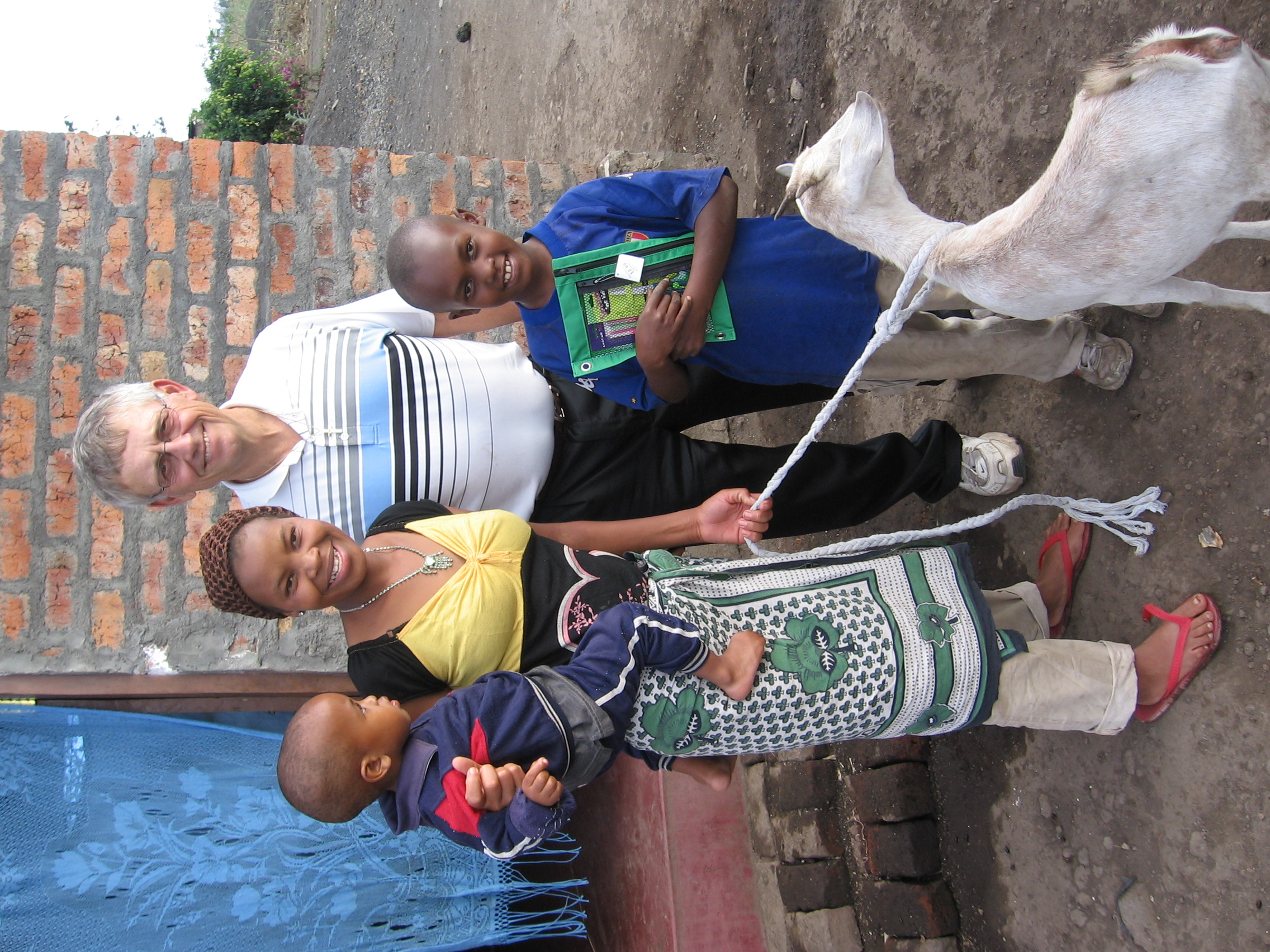
He did the same quiet work with the Tanzanian team, and it was not always comfortable. On his longest trip, 21 days, the culture shock finally caught up with him. Tired and frustrated by how hard it was to communicate, he asked God why He had made so many languages. The answer came in a memory of an African pastors' conference, where many voices and languages sang distinct parts in one beautiful harmony. Dad came to see partnership that way: Americans and Tanzanians each bringing something to the table, practicing together until it sounds like music. Harmony like that, he says, takes far longer than Americans expect.
Commitment, not time
We call Dad a long-hauler: 30 years at AT&T, almost 60 years married to Mom, and a quarter century with the people of Karansi. But when we asked him what it takes to be one, he pushed back on the word. Don't think of a long-hauler "in terms of time," he said, "but rather intent and commitment."
For Dad, the commitment is simple. If you are convinced God has called you into a mission, your job is to stay in it until God calls you to something different. Along the way, people asked when the Americans planned to hand things off and leave. Dad answered that leaving was never the point. Family members don't leave. They keep coming back.
Pastor Wariaeli noticed. "The fact that you kept coming back year after year," he once told Dad, "convinced us that you truly loved us."
When we asked Pastor Wariaeli to tell us about Dad, he began by thanking God "for the grace He gave to His servant." He remembered their first meeting, more than 25 years ago: "With a big heart he agreed to come to the village and go from house to house, and that was the beginning of our partnership." He described Dad as "a gentle man of God with unique wisdom, a visionary who sees with his eyes and sees with his heart what God is going to do. The fruits of his work in Tanzania speak for him." And he ended with a verse, Isaiah 43:18, and a simple line: "Tim Neet is a leader. He sees far and before others."
Stepping down, not stepping out
Now Dad is retiring, and he is approaching it the way he has approached everything else: prayerfully, honestly, and with an eye on the people who come next. His advice for passing the baton is to "prepare and step back." You can step down, he says, "but not necessarily step totally out. It takes a realistic look at where you still add value, and the humility to see where you no longer do.” For the next generation of sponsors, donors, and leaders, his counsel is to "fan the heart first." Pray. Go, if you can, because when you go, you catch it. Tell a friend. Open your home and share the story. Join the prayer team (it meets on Zoom every Thursday morning at 7:00 am! 🙂)
Near the end of our conversation, Dad and Mom kept coming back to the same idea: this was never Dad's ministry. "I was a participant in the process," he said. It was God's plan, carried by many hands, and not finished yet. Corrie ten Boom pictured life as a tapestry, where from underneath you see only knots and loose threads. For years, Dad worked on the back side of this one. Now, 25 years in, with graduates going to college, leading families, starting businesses, and widows who have gone from being cared for to caring for others, we get to see the picture emerging on the front of the tapestry.
Pastor Wariaeli chose a verse for Dad, and it fits this season well. "Forget the former things; do not dwell on the past. See, I am doing a new thing! Now it springs up; do you not perceive it?" (Isaiah 43:18–19). Dad has spent 25 years watching for what God was about to do in Karansi. As he steps back, we trust the same God is already doing the next new thing, through the people Dad helped bring to the table.
Dad, thank you for putting your name on the list, and for never taking it off. We are so grateful we get to be your daughters.
Joy and Julie